Section: Size NB–11 mo · Nursery
Best Diapers 2026: Brands Compared, Sizes, Counts and Costs
Which diaper to buy, what size by weight and age, how many a day, what to pay per diaper, and what the labels mean. Ten diapers compared.
We earn a commission if you buy through links on this page, at no extra cost to you. It never changes what we pick. How we make money.
Our picks
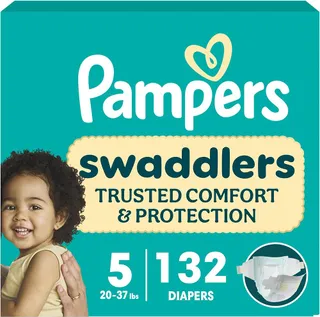
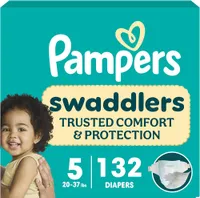
Pampers Swaddlers Diapers, Size 5, 132 Count
Fragrance free since June 2026, made in every size from newborn to 8, and Amazon’s top seller.
The one to start with
$25 to $50at Amazon Check price of Swaddlers Diapers, Size 5, 132 Count at Amazon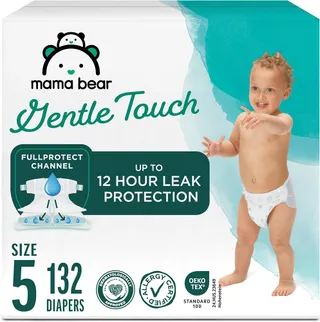
Amazon Brand Mama Bear Gentle Touch Diapers, Size 5, 132 Count
A Wirecutter runner-up that matched pricier diapers in its lab, at about two-thirds of the Swaddlers price.
Lab results for less
$25 to $50at Amazon Check price of Mama Bear Gentle Touch Diapers, Size 5, 132 Count at Amazon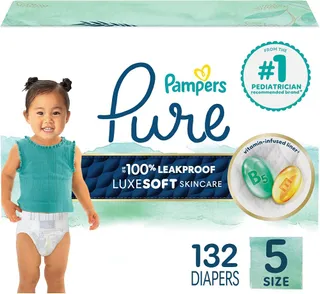
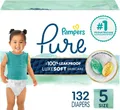
Pampers Pure Protection Diapers, Size 5, 132 Count
Scored 97 out of 100 in Consumer Reports’ 2026 tests and is Wirecutter’s upgrade pick.
Top scores, higher price
$50 to $75at Amazon Check price of Pure Protection Diapers, Size 5, 132 Count at Amazon
Pampers Swaddlers is the diaper to start with for most babies. If the price per diaper matters more, Amazon’s Mama Bear did about as well in lab tests for about two-thirds of the cost.
You will change about 3,000 diapers in the first year, says the American Academy of Pediatrics. In 2026, Consumer Reports and Wirecutter both found that store brands score about as well as the big names.
So the brand matters less than the fit on your baby. Sizes by weight and age, daily counts and what to pay per diaper are further down the page.
Quick picks: what do you need?
- A newborn: Huggies Little Snugglers or Pampers Swaddlers.
- The lowest price per diaper: Mama Bear or Luvs.
- Sensitive skin: Pampers Pure or Kudos.
- Fewer added ingredients: Coterie, which is totally chlorine free and EWG Verified.
- Wet sheets in the morning: Huggies Overnites, in our overnight section below.
Which diaper to buy
The table compares the ten diapers in this guide. Prices per diaper come from Amazon on Nov. 21, 2026, except Kudos, which comes from Consumer Reports. Pack sizes differ, so compare cents, not boxes.
 Pampers Swaddlers Diapers, Size 5, 132 Count Our Pick | 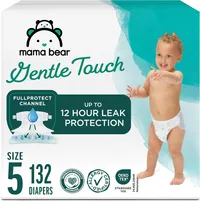 Amazon Brand Mama Bear Gentle Touch Diapers, Size 5, 132 Count Best Value | 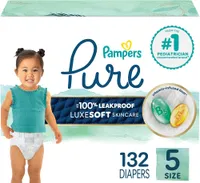 Pampers Pure Protection Diapers, Size 5, 132 Count Also Great | 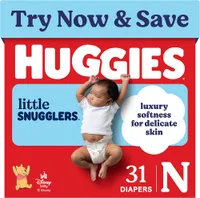 Huggies Little Snugglers Newborn Diapers, 31 Count | 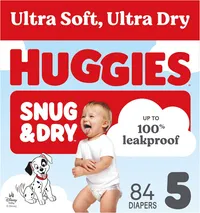 Huggies Snug & Dry Diapers, Size 5, 84 Count | 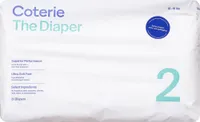 Coterie The Diaper, Size 2, 31 Count | 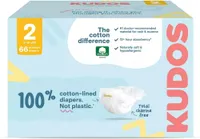 Kudos Cotton-Lined Diapers | 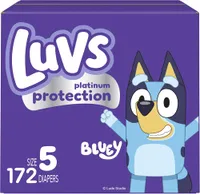 Luvs Platinum Protection Diapers, Size 5, 172 Count | 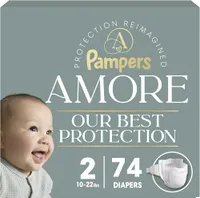 Pampers Amore Diapers, Size 2, 74 Count | 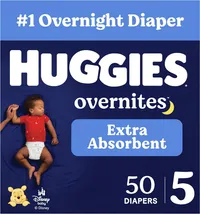 Huggies Overnites Diapers, Size 5, 50 Count | |
|---|---|---|---|---|---|---|---|---|---|---|
| Price | $25 to $50 Check price of Swaddlers Diapers, Size 5, 132 Count at Amazon | $25 to $50 Check price of Mama Bear Gentle Touch Diapers, Size 5, 132 Count at Amazon | $50 to $75 Check price of Pure Protection Diapers, Size 5, 132 Count at Amazon | Under $15 Check price of Little Snugglers Newborn Diapers, 31 Count at Amazon | $15 to $25 Check price of Snug & Dry Diapers, Size 5, 84 Count at Amazon | $15 to $25 Check price of The Diaper, Size 2, 31 Count at Amazon | $25 to $50 Check price of Cotton-Lined Diapers at Kudos | $25 to $50 Check price of Platinum Protection Diapers, Size 5, 172 Count at Amazon | $15 to $25 Check price of Amore Diapers, Size 2, 74 Count at Amazon | $25 to $50 Check price of Overnites Diapers, Size 5, 50 Count at Amazon |
| Bottom line | The diaper most parents start with: soft, fragrance free and stocked in every size. | Amazon’s own brand, a runner-up in Wirecutter’s lab and home tests. | Pampers’ premium line, 97 out of 100 in Consumer Reports’ 2026 tests. | Huggies’ newborn line, with a gentler liner up to size 2. | Huggies’ everyday line, the Good Housekeeping pick, near store-brand prices. | A subscription diaper that Babylist scored softest of the ones it rated. | The cotton-lined diaper, 95 out of 100 in Consumer Reports’ tests. | P&G’s budget brand, about the same price per diaper as Mama Bear. | The 2026 premium Pampers, about 10% above Swaddlers at launch. | Huggies’ night diaper, with extra absorbency for 12-hour stretches. |
| Pros |
|
|
|
|
|
|
|
|
|
|
| Con | About half again the price of a store brand per diaper | Fewer extras, such as a softer waistband, than name brands | The most expensive Pampers per diaper here | Stops at size 6; sizes 7 and 8 are other Huggies lines | Size 5 starts at 25 lb, later than Pampers’ 20 lb | The highest price per diaper in this guide | Kudos says it runs slightly small | Parents’ reviews are split | Few reviews yet, since it launched in March 2026 | Close to twice the price per diaper of a day diaper |
| Best for | A first box, and most babies after that | Families buying a box a week | Parents who want fewer additives and a top lab score | The first weeks, before a baby moves much | A Huggies fit without the Huggies premium | Sensitive-skin households with room in the budget | Parents who want cotton where the diaper touches skin | A spare box for daycare or the car | Parents curious about Pampers’ new top line | A baby who wakes up wet |
| Skip if | Price per diaper is your main concern | You want the softest diaper you can find | You go through more than a box a week | Your baby is crawling: Little Movers fits active babies | You want the softest material | Dryness is your first concern: Babylist rated it weaker there | Your baby is at the top of a size range | You can buy Mama Bear for the same price | You want a long review record | Your baby sleeps dry in a day diaper |
Specs from manufacturers; a dash means the maker’s page does not say. Prices are ranges and change often; each button shows today's price at the store.
Two more names come up in the lab results. Consumer Reports’ 2026 Top Pick is bumbum, a P&G brand sold at Target, at about 29 cents a diaper for size 3. Wirecutter’s top pick is Target’s up&up, at about 15 cents.
Neither one is sold on Amazon.
Pampers Swaddlers
Swaddlers Diapers, Size 5, 132 Count · Our Pick
Our Pick
The diaper most parents start with: soft, fragrance free and stocked in every size.
$25 to $50 see today's price at Amazon
Check price of Swaddlers Diapers, Size 5, 132 Count at AmazonPhotos: Pampers
- Best for
- A first box, and most babies after that
- Skip if
- Price per diaper is your main concern
Read our full notes Hide our notes
Our pick, and the diaper most parents start with. On Nov. 21, Swaddlers topped Amazon’s disposable diaper chart. The size 5 box alone had more than 130,000 reviews.
Pampers made the whole line fragrance free in June 2026, after feedback from parents. The maker says it is free of parabens, elemental chlorine and latex. A wetness line changes color when the diaper is wet.
It comes in every size from newborn to 8, so you will not need to switch brands as your baby grows.
At about 38 cents a diaper in the size 5 box, it costs half again as much as a store brand.
Pros: fragrance free; every size from newborn to 8. Con: the price per diaper.
Mama Bear diapers
Mama Bear Gentle Touch Diapers, Size 5, 132 Count · Best Value
Best Value
Amazon’s own brand, a runner-up in Wirecutter’s lab and home tests.
$25 to $50 see today's price at Amazon
Check price of Mama Bear Gentle Touch Diapers, Size 5, 132 Count at AmazonPhotos: Amazon Brand
- Best for
- Families buying a box a week
- Skip if
- You want the softest diaper you can find
Read our full notes Hide our notes
Our best value pick. Wirecutter tested 14 diapers in a lab and 10 at home. It named Amazon’s house brand, Mama Bear Gentle Touch, a runner-up.
Wirecutter says it performs nearly as well as its top pick, Target’s up&up. At about 25 cents a diaper in the size 5 box, it costs about two-thirds of the Swaddlers price.
The maker says it has no perfume, lotion, parabens or phthalates. It has a wetness indicator and a channeled core rated for up to 12 hours.
What you give up are extras. Wirecutter noted that it lacks some small features of pricier diapers.
Pros: lab results close to diapers that cost more; a low price per diaper. Con: fewer extras.
Pampers Pure Protection
Pure Protection Diapers, Size 5, 132 Count · Also Great
Also Great
Pampers’ premium line, 97 out of 100 in Consumer Reports’ 2026 tests.
$50 to $75 see today's price at Amazon
Check price of Pure Protection Diapers, Size 5, 132 Count at AmazonPhotos: Pampers
- Best for
- Parents who want fewer additives and a top lab score
- Skip if
- You go through more than a box a week
Read our full notes Hide our notes
Our upgrade pick. Consumer Reports gave Pampers Pure 97 out of 100 in 2026, with top marks for absorption speed and dryness. Wirecutter also names it as its upgrade pick.
The maker says it is free of fragrance, elemental chlorine, parabens and latex, and the liner has added vitamins. Pampers bleaches its pulp with chlorine dioxide, a method called ECF. Coterie uses a process with no chlorine at all, called TCF.
At about 49 cents a diaper in the size 5 box, it is the most expensive Pampers here. Choose it if a top lab score and a short ingredient list both matter to you.
Pros: a top Consumer Reports score; few additives. Con: the price.
Huggies Little Snugglers
Little Snugglers Newborn Diapers, 31 Count
For the newborn months
Huggies’ newborn line, with a gentler liner up to size 2.
Under $15 see today's price at Amazon
Check price of Little Snugglers Newborn Diapers, 31 Count at AmazonPhotos: Huggies
- Best for
- The first weeks, before a baby moves much
- Skip if
- Your baby is crawling: Little Movers fits active babies
Read our full notes Hide our notes
Huggies’ line for the first months. From preemie to size 2, it uses a softer liner the maker calls GentleAbsorb. From size 3 up, it switches to the Dry Touch liner of other Huggies.
The maker says it is fragrance free and made without lotions, phthalates or latex. Sizes 1 and 2 have a blowout barrier all the way around. The newborn pack works out to about 30 cents a diaper.
Little Snugglers stops at size 6. For sizes 7 and 8, Huggies sells Little Movers and Snug & Dry instead.
Babylist lists it among its top diapers for newborns.
Pros: a gentle liner for the newborn months; fragrance free. Con: the line ends at size 6.
Stocking up before the baby arrives? Buy one box of newborn and two of size 1, since babies grow out of newborn size fast. Our baby registry list uses the same split.
Huggies Snug & Dry
Snug & Dry Diapers, Size 5, 84 Count
For an everyday Huggies box
Huggies’ everyday line, the Good Housekeeping pick, near store-brand prices.
$15 to $25 see today's price at Amazon
Check price of Snug & Dry Diapers, Size 5, 84 Count at AmazonPhotos: Huggies
- Best for
- A Huggies fit without the Huggies premium
- Skip if
- You want the softest material
Read our full notes Hide our notes
Huggies’ everyday line, and Good Housekeeping’s top diaper pick. At about 30 cents a diaper in the size 5 box, it costs a little more than a store brand and well under Swaddlers.
The maker says it is fragrance free and free of elemental chlorine, and it is made without natural rubber latex. It has a blowout blocker and a stretchy waistband.
Size 5 starts at 25 lb here, later than the 20 lb on the Pampers box. A baby between the two weights may still fit a Huggies size 4.
Try this box if Huggies fits your baby better than Pampers and the Little Snugglers price feels high.
Pros: the Good Housekeeping pick; a mid price. Con: the sizes differ from Pampers, so read the box.
Coterie The Diaper
The Diaper, Size 2, 31 Count
For the softest material
A subscription diaper that Babylist scored softest of the ones it rated.
$15 to $25 see today's price at Amazon
Check price of The Diaper, Size 2, 31 Count at AmazonPhotos: Coterie
- Best for
- Sensitive-skin households with room in the budget
- Skip if
- Dryness is your first concern: Babylist rated it weaker there
Read our full notes Hide our notes
Babylist scored Coterie the softest diaper it rated, and weaker on dryness. Coterie’s pulp is totally chlorine free. It is on the EWG Verified list in every size from newborn to 7.
It starts with two newborn sizes, N and N+1, both for babies under 10 lb. Size 1 runs 8 to 12 lb.
Coterie sells mostly by subscription. The 31-count box on Amazon works out to about 64 cents a diaper. Babylist found 51 to 56 cents on Coterie’s own site.
Consumer Reports ranked Coterie first in 2023. It is not in the 2026 top list we read.
Pros: the softest material Babylist rated; TCF and EWG Verified. Con: the highest price per diaper in this guide.
Kudos Cotton-Lined
Cotton-Lined Diapers
For a cotton topsheet
The cotton-lined diaper, 95 out of 100 in Consumer Reports’ tests.
$25 to $50 see today's price at Kudos
Check price of Cotton-Lined Diapers at KudosPhotos: Kudos
- Best for
- Parents who want cotton where the diaper touches skin
- Skip if
- Your baby is at the top of a size range
Read our full notes Hide our notes
The diaper for parents who want cotton next to the skin. Kudos uses a topsheet of 100% cotton, with no lotion, fragrance or natural latex.
Consumer Reports gave it 95 out of 100, at about 37 cents a diaper. It got top marks for absorption speed and dryness.
Kudos changed its sizes, and its help center says the diapers run slightly small. Size 2 now covers 9 to 16 lb, and size 6 starts at 32 lb. Near the top of a range, buy the next size up.
Kudos sells on its own site and at Target.
Pros: a cotton topsheet; a 95 from Consumer Reports. Con: it runs small.
The short answer
The best diapers for a newborn
Huggies Little Snugglers and Pampers Swaddlers are the two most popular newborn diapers. On Nov. 21, they were the top two in Amazon’s disposable diaper chart.
Within Pampers, Swaddlers is the usual first diaper, and Pampers Pure is the one with fewer additives. Little Snugglers uses a gentler liner up to size 2.
Pampers or Huggies for a newborn? No lab result settles it. Huggies and Pampers fit differently, so try a small pack of each in the first week and keep the one that leaks less.
How many newborn diapers to buy: Pampers puts the first month at 250 to 300 newborn diapers, at 8 to 12 a day. Many babies move to size 1 within weeks.
So buy one box of newborn and two of size 1, the same split as our baby registry list. Diapers in sizes 1 and 2 also make a useful gift, and our baby shower gift ideas say the same.
Can a 7 lb baby wear size 1? Usually not yet. Newborn size covers babies up to 10 lb, and size 1 starts at 8 lb on most charts.
A 7 lb baby fits newborn size. Kudos is the exception, with a size 1 that starts at 7 lb.
Diaper sizes by weight and age
Go by weight, not age. When your baby fits two sizes, pick the larger one if you see red marks or leaks. Most brands use close to the same chart:
| Size | Weight | Typical age (Pampers estimate) | Months in this size |
|---|---|---|---|
| Newborn | up to 10 lb | birth to about 6 weeks | 1.6 |
| 1 | 8 to 14 lb | 6 weeks to 3 months | 1.7 |
| 2 | 12 to 18 lb | 3 to 6 months | 2.8 |
| 3 | 16 to 28 lb | 6 to 12 months | 5.8 |
| 4 | 22 to 37 lb | 12 to 19 months | 6.8 |
| 5 | 27 lb and up | 19 to 24 months | 5.0 |
| 6 | 35 lb and up | 2 to 2.5 years | 5.8 |
| 7 | 41 lb and up | 2.5 years and up | 4.1 |
| 8 | 46 lb and up | for children still in diapers | n/a |
The ages are our sums of Pampers’ own estimate of months spent in each size. They are averages, and babies grow at different rates.
Pampers prints wider weight ranges on some lines, such as 20 to 37 lb for Swaddlers size 5. Coterie and Kudos use their own sizes, so read the box.
What size does a 3-month-old wear? Most wear size 1 or 2, by Pampers’ estimate.
Is size 3 at 3 months normal? Yes, if your baby weighs 16 lb or more and the diaper fits. The weight decides, not the age.
Size 3 or size 4? Size 3 runs 16 to 28 lb and size 4 runs 22 to 37 lb. Between 22 and 28 lb, both fit, so let red marks or leaks tell you to move up.
Size 4 is the size babies stay in longest, about 6.8 months by Pampers’ count.
What is the weight limit on size 1? About 14 lb on most charts. Huggies Little Snugglers and Pampers both print 8 to 14 lb.
Three signs say it is time to size up:
- red marks on the thighs or waist;
- leaks or blowouts that start out of nowhere;
- tabs that only just reach the middle.
Size 8 exists for older children still in diapers. Pampers Swaddlers comes in size 8 at Walmart, sold since June 2023, and Huggies Little Movers has one too, both for 46 lb and up.
How many diapers does a baby use a day?
Pampers’ own counts by age:
| Age | Diapers a day |
|---|---|
| 0 to 1 month | 8 to 12 |
| 2 to 4 months | 8 to 10 |
| 5 to 8 months | 7 to 9 |
| 9 to 12 months | 6 to 8 |
The AAP puts the first year at about 3,000 diapers. By the time your child is out of diapers, the total is 6,000 to 8,000.
How long do 100 diapers last? About 8 to 12 days for a newborn, at 8 to 12 a day. At 6 to 8 a day near the first birthday, 100 diapers last two weeks or a little more.
And 200? About 17 to 25 days for a newborn, and roughly a month at the end of the first year.
Most children are still in diapers well past age 2. A 2002 study in Pediatrics followed 267 children. The median age for staying dry during the day was 32.5 months for girls and 35 months for boys.
How much should you pay per diaper?
Name brands cost about 30 cents a diaper on average, the AAP says, which puts the first year at around $1,000. In this guide, prices run from about 25 cents a diaper for Mama Bear and Luvs to about 64 cents for Coterie on Amazon. At 3,000 diapers, that comes to roughly $750 to $1,900 for the first year.
A good price is about 25 to 30 cents a diaper for a store brand or a mid-priced name brand. Paying 40 cents or more buys a premium line such as Pampers Pure or Coterie.
As for the box itself, the main boxes in this guide ran $25 to $65 on Amazon on Nov. 21. Pack sizes differ, so the price of a box tells you little. Three habits keep the cost down:
- Compare the price per diaper, not per box. A bigger box is not always cheaper. On Nov. 21, a 32-count pack of Parent’s Choice size 4 at Walmart cost 16.8 cents a diaper. The 192-count box cost 22.1 cents.
- Use Subscribe & Save on the box you buy every week.
- Scan the codes if you buy Pampers. Pampers Club pays $10 in Pampers Cash for every 10 diaper scans, and the cash expires after 6 months.
Regular baby diapers are not FSA or HSA eligible, according to IRS Publication 502.
Diapers are a large cost for many families. In the 2026 NDBN Diaper Check, 40% of US households with young children in diapers said they could not afford enough of them. The National Diaper Bank Network lists its member diaper banks by state.
Overnight diapers
Huggies Overnites is the night diaper to try if your baby wakes up wet. The maker says it has extra absorbency for the night, a curved fit and double grip strips. It comes in sizes 3 to 7, and the size 5 box works out to about 57 cents a diaper, close to twice a day diaper.
The cheaper way to start is to use your day diaper one size up at night. Amazon’s Mama Bear page notes that a bigger size gives extra absorbency. If that still leaks, move to a night diaper for bedtime only and keep your regular diaper for the day.
Pampers sells its own night line, Swaddlers Overnights.
What is inside a diaper
A disposable diaper has four main layers, Pampers says:
- a soft top sheet against the skin;
- an acquisition layer that spreads the liquid;
- an absorbent core of wood pulp and a gel;
- a waterproof outer cover.
The gel, called superabsorbent polymer, does most of the work. It can absorb over 300 times its weight in pure water, Scientific American reports. With urine, the number drops.
Pampers says up to 30 times its weight in liquid. The salts in urine reduce how much the gel can take in, as a LibreTexts chemistry demonstration shows.
The color line on the front of many diapers is a wetness indicator. It changes color when the diaper is wet, which helps at night and with a newborn.
What “non-toxic” and “hypoallergenic” mean on a diaper
Neither word has a legal definition for diapers in the US. The FDA says there is no federal standard for “hypoallergenic,” and a company does not have to prove the claim. Two lawsuits filed against Kimberly-Clark in 2025 and 2026 challenge its use of the word on Huggies.
No federal rule makes diaper brands list their ingredients. Three states now do:
- New York: a list of ingredients on every package, required since December 2025.
- Illinois: a printed list on every package, within 18 months of the law taking effect on Jan. 1, 2027.
- California: a full ingredient list on the maker’s website by Jan. 1, 2029.
If your baby gets a rash that does not clear up, call your pediatrician.
Cloth or disposable?
Cloth diapers cost more at the start and less over time. A starter set of reusables runs about $500 to $800, according to Healthline, against $2,000 to $3,000 for two years of disposables.
On rashes, a 2024 study of 1,389 families in Brazil found no significant difference between cloth and disposable diapers. On the climate, it depends on the washing.
A 2008 UK government study found the two close, at about 550 kg of CO2 equivalent for disposables and 570 kg for cloth over two and a half years. Washing full loads, at lower heat, and drying on a line cut the cloth number.
Pull-ups and swim diapers
Pull-on diapers or training pants? Pull-on diapers, such as Pampers Cruisers 360 and Huggies Little Movers pants, are diapers you slide on like underwear, handy for a baby who will not lie still.
Training pants such as Pull-Ups and Pampers Easy Ups are made for toilet training. They come in toddler sizes, not diaper sizes.
Swim diapers are a different product. A regular diaper swells up in water.
Swim diapers such as Huggies Little Swimmers and Pampers Splashers are made without that absorbent gel, so they keep solids in without filling with pool water. Babylist compares them, including reusable ones.
Do diapers expire?
Not on a fixed date. Pampers says an unopened pack keeps for up to 3 years from the manufacturing date. An open pack is best used within 12 months, and the first digit of the production code is the year it was made.
Older diapers can yellow, absorb a little less and stick less well. Keep them in a cool, dry place.
Is there a diaper recall right now?
No. The CPSC has never announced a diaper recall, CBS News reported on Nov. 19, 2026. That includes Millie Moon.
On Oct. 22, 2026, Consumer Reports asked Millie Moon to recall its diapers and told parents to stop using them. It cited more than 600 reports of skin reactions to the CPSC. Millie Moon has not recalled them.
A short history of the diaper
In the late 1940s, Marion Donovan, a mother in Connecticut, cut up a shower curtain and sewed a waterproof diaper cover she called the Boater, the Smithsonian says. She started selling it at Saks Fifth Avenue in 1949 and patented it in 1951.
Procter & Gamble brought Pampers to stores in the 1960s. The absorbent gel in today’s diapers arrived in the 1980s.
- Sources: Consumer Reports’ 2026 diaper ratings, which scored 37 disposable diapers on absorption speed and dryness. Wirecutter’s 2026 guide, with 14 diapers in a lab and 10 at home. Babylist and Good Housekeeping. Pampers’ size, count and materials pages. The maker’s page and the Amazon listing for each product, read on Nov. 21, 2026.
- Criteria: results from independent lab tests, the price per diaper, and sizes and materials we could read on the maker’s own page.
- What we did not do: we did not test diapers ourselves. Our picks weigh the lab results against price and how easy each diaper is to buy, as explained in how we pick.
FAQ
What is the best diaper brand?
For most babies, Pampers Swaddlers. In lab tests by Consumer Reports and Wirecutter, store brands such as up&up, Mama Bear and Parent's Choice scored about as well as the big names, so the brand matters less than the fit on your baby.
Are Pampers or Huggies better?
Neither wins across the lab tests we read. Consumer Reports and Wirecutter put Pampers Pure at the top, while Good Housekeeping picked Huggies Snug & Dry. Try a small pack of each and keep the one that leaks less on your baby.
Are diapers FSA or HSA eligible?
Regular baby diapers are not. IRS Publication 502 counts diapers as a medical expense only when needed to relieve the effects of a particular disease. A 2025 bill in Congress would change that, and it has not passed.
Where can I get free diapers?
From a diaper bank. The National Diaper Bank Network keeps a directory of member banks by state. SNAP and WIC do not cover diapers.
Can I use a regular diaper in the pool?
No. A regular diaper swells up in water. Swim diapers such as Huggies Little Swimmers and Pampers Splashers are made without that absorbent gel, so they keep solids in without filling with pool water.
Why trust us
We researched this guide against manufacturer specs, recall databases and verified owner reviews; we say which products, if any, we tested hands-on. Nobody pays to be here. Read how we pick
Who made this guide
Researched and written by the One Mom's Moxie editorial team and edited by Olivia. Hands-on testing for this guide: none. How we pick · About us
- AAP, Buying Diapers (HealthyChildren.org)
- Pampers, Diaper size and weight chart
- Pampers, How many diapers does a baby need a day?
- Pampers, Absorbent material in diapers
- Pampers, Do Pampers diapers expire?
- Consumer Reports, Best Diapers, updated Oct. 17, 2026
- Quartz, The 13 best diapers to buy in 2026: Consumer Reports, June 19, 2026
- Wirecutter, The Best Diapers, updated June 25, 2026
- Babylist, Best Disposable Diapers, March 25, 2026
- Babylist, Best Swim Diapers
- Scientific American, What keeps babies dry
- Uber, Imoto and Carvalho, Cloth versus disposable diapers, J Pediatr (Rio J)
- Schum et al., Sequential acquisition of toilet-training skills, Pediatrics 2002 (PubMed)
- UK Environment Agency, An updated lifecycle assessment for disposable and reusable nappies (2008)
- Smithsonian Magazine, Meet Marion Donovan
- IRS, Publication 502, Medical and Dental Expenses
- FDA, Hypoallergenic Cosmetics
- New York State Senate, S2279 (2023-2024), diaper ingredient labeling
- California Legislature, AB 1901 (2025-2026), children's diapers: ingredient disclosure
- CBS News, Diapers and child injury reports, Nov. 19, 2026
- National Diaper Bank Network, Member diaper banks
- SSRS, The NDBN Diaper Check 2026
- LibreTexts Chemistry, Superabsorbent materials (demonstration)
- Healthline, How to use cloth diapers
- CPSC, Recalls
First published Nov 21, 2026
Spotted a mistake? Report an error